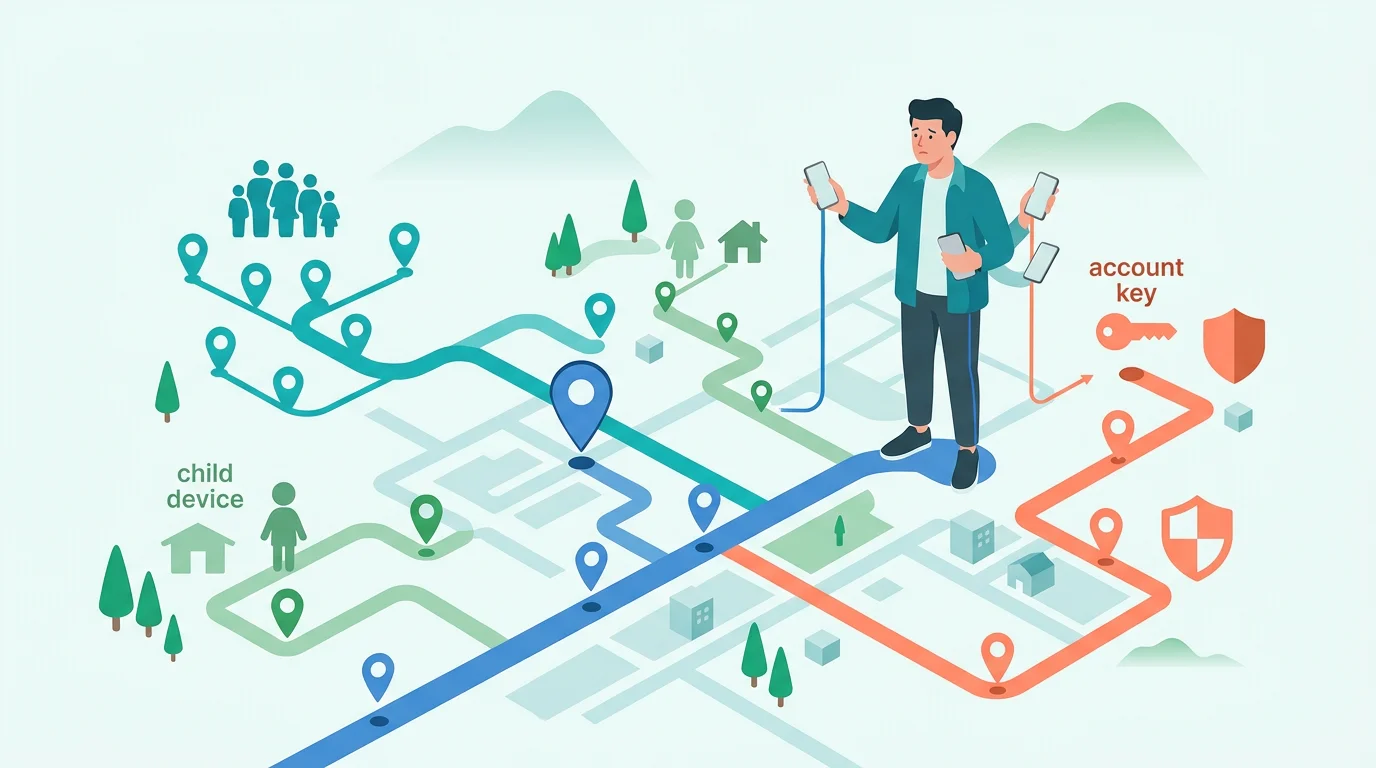

Facebook monitoring can mean three different things: securing your own Meta account, using transparent family/device controls, or installing an authorized device-monitoring product on a phone you own or administer. Those are not interchangeable paths.
No legitimate service can monitor Facebook from only a username, phone number, email address, or profile URL. Meta’s own recovery and session tools help the account owner secure access; they do not give a parent or third party a private Messenger reader. This guide keeps those boundaries visible while comparing current options and realistic price ranges.
What Facebook monitoring can actually mean

Facebook’s Security Checkup, Where You’re Logged In, two-factor authentication,
login alerts, and facebook.com/hacked are account-owner security tools. Use
them when an account may be compromised. Google Family Link and Apple Screen
Time can set device limits, but they do not expose private Facebook or
Messenger messages.
Review active sessions, change the password, enable 2FA, turn on login alerts, and use Facebook’s recovery flow on a previously used device.
Requires an owned or administered device and a legitimate setup path. Android is often broader; iPhone features are more constrained and may be account- or backup-dependent.
 Expert opinion Eva Galperin Director of Cybersecurity, Electronic Frontier Foundation
 Stalkerware risk is not only about features. It is also about who holds the data, how the product is marketed, and whether monitoring happens without meaningful consent.Read EFF's stalkerware review
Meta’s own security layer should therefore be the first branch for an account problem, while a commercial product belongs only in an authorized device administration decision.
The current shortlist

Start with the least intrusive option that answers the actual question. A parent who needs screen-time limits does not need a private-message reader, and someone recovering a hacked account should not install a monitoring app.
The right first tool depends on whether the problem is security, supervision, or authorized administration.
-
Compromised account: Facebook recovery, session review, password reset, and 2FA.
-
Android family supervision: Google Family Link and transparent account controls.
-
iPhone limits: Screen Time, Family Sharing, and Find My.
-
Authorized broader logs: verify the exact device path and current vendor claim.
-
Username-only or private-Messenger promises: stop and treat them as scam signals.

Name the problem
Separate a hacked account from family supervision or authorized device administration.

Use Meta security
Review sessions, reset the password, enable 2FA, and use facebook.com/hacked when needed.

Check built-in controls
Use Family Link or Screen Time when app time, limits, or location are enough.

Confirm access
For commercial tools, verify device ownership, physical setup, platform, and exact Facebook claim.
Check the full cost
Compare monthly equivalent, renewal, refund, device count, and vendor data handling.
This sequence prevents an account-recovery problem from turning into an unsafe purchase and gives the reader a clear stop point before third-party monitoring.
How the comparison works

The shortlist is judged by evidence and fit, not by the largest surveillance feature list. A vendor claim about Facebook or Messenger still needs a current platform-specific check and an authorized access path.
| Criterion | What to verify | Why it matters |
|---|---|---|
| Access | Owned/administered device and legitimate setup | No access path means no reliable monitoring. |
| Facebook scope | Current official product claim | A generic social-app list is not proof of current coverage. |
| Platform | Android versus iPhone conditions | iPhone paths are often narrower or account-dependent. |
| Money | Entry price, renewal, devices, refund | Monthly-equivalent headlines can hide the real total. |
| Privacy | Visibility, retention, deletion, vendor history | Sensitive Facebook data creates a second risk holder. |
| Boundary | No phone-number or private-chat bypass | Rejects scam and account-compromise claims. |
These criteria keep the article Facebook-specific and prevent a broad generic spy-app ranking from substituting for a real access and security analysis.
The current shortlist in detail
1. Facebook Security Checkup and recovery

For a compromised account, use Facebook’s own recovery path first. The Help
Center directs people to facebook.com/hacked on a previously used device.
The Where you're logged in view lists sessions with time, location, and
device information so the owner can end unfamiliar sessions. Price snapshot:
$0.
Meta security tools: pros and cons
Pros
- Free and first-party
- Designed for account recovery
- Supports session review and 2FA
Cons
- Not parental monitoring
- Does not reveal another person's private messages
- Requires account-owner access
Bottom line: First choice for a hacked or suspicious Facebook account.
2. Google Family Link

Family Link can supervise supported Android accounts through screen time, app approvals, content settings, and selected location features. It does not read Facebook or Messenger content. Price snapshot: $0 for core controls.
Google Family Link: pros and cons
Pros
- Free core controls
- Transparent Android supervision
- Lower third-party data exposure
Cons
- Not Facebook content monitoring
- Requires supported family setup
- Limited cross-platform coverage
Bottom line: Best when the real need is Android supervision, not message access.
3. Apple Screen Time and Family Sharing

Apple’s Screen Time, Family Sharing, and Find My can manage app limits, downtime, communication settings, and family location. They do not expose private Facebook or Messenger messages. Price snapshot: $0 beyond the supported Apple device and family account.
Apple controls: pros and cons
Pros
- Built into Apple devices
- Transparent family model
- No monitoring-suite subscription
Cons
- Not Facebook content monitoring
- Family Sharing setup is required
- Controls vary by device and age
Bottom line: Sensible iPhone baseline for limits and location.
4. Hoverwatch

Hoverwatch is an Android-first commercial candidate. Its public pricing has shown about $29.95/month for one month or roughly $8.33/month equivalent on a $99.95 annual personal plan. Confirm the live currency, renewal, device count, Facebook feature, and lawful-use requirement before paying.
Hoverwatch: pros and cons
Pros
- Android-first monitoring path
- Public price signal
- Lawful-use language is explicit
Cons
- Requires authorized device access
- Not a guarantee of private Messenger content
- Vendor-held sensitive data
Price snapshot: budget roughly $8–30/month equivalent depending on term; verify checkout and renewal.
Bottom line: Conditional Android comparison candidate, never a username-only tool.
5. mSpy

mSpy markets broad device-monitoring categories, but Android and iPhone paths differ. Public plan signals are roughly $29.99/month for one month, $19.99 on a three-month term, and $11.67/month equivalent on a 12-month Premium plan. Verify the exact Facebook/Messenger claim, setup path, refund, and renewal.
mSpy: pros and cons
Pros
- Broad Android categories
- Multiple plan levels
- Recognizable support path
Cons
- iPhone depth can be limited
- High privacy and retention risk
- Social-app claims need current verification
Price snapshot: about $12–49/month by tier and term.
Bottom line: Comparison candidate only after platform and Facebook scope checks.
6. uMobix

uMobix is a commercial parental-suite candidate with Android/iPhone differences. Public comparison signals place a one-device annual plan around $12–16/month equivalent, but current checkout, device count, refund, and Facebook scope are the source of truth.
uMobix: pros and cons
Pros
- Broad parental-suite positioning
- Android and iPhone paths
- Alerts and activity categories
Cons
- Feature depth varies by platform
- Facebook claim needs verification
- Renewal and data terms matter
Price snapshot: plan on roughly $12–16/month equivalent for annual billing; verify the live total.
Bottom line: Conditional comparison pick, never private-Messenger access by account ID.
7. FlexiSPY

FlexiSPY is a high-access specialist, not a normal first-line parental tool. Advanced features can depend on root, jailbreak, physical access, or device state. Current public signals place plans around $50–119/month depending on tier, with higher annual commitments possible. Verify the live checkout and never treat the product as a private Facebook bypass.
FlexiSPY: pros and cons
Pros
- Broad specialist feature set
- Detailed compatibility material
- Useful for high-access comparison
Cons
- High cost
- Root or jailbreak may be required
- Significant privacy and setup risk
Price snapshot: budget roughly $50–119/month signal by tier; verify renewal and device-state requirements.
Bottom line: Specialist-only option with more friction and risk than most parents need.
Android versus iPhone
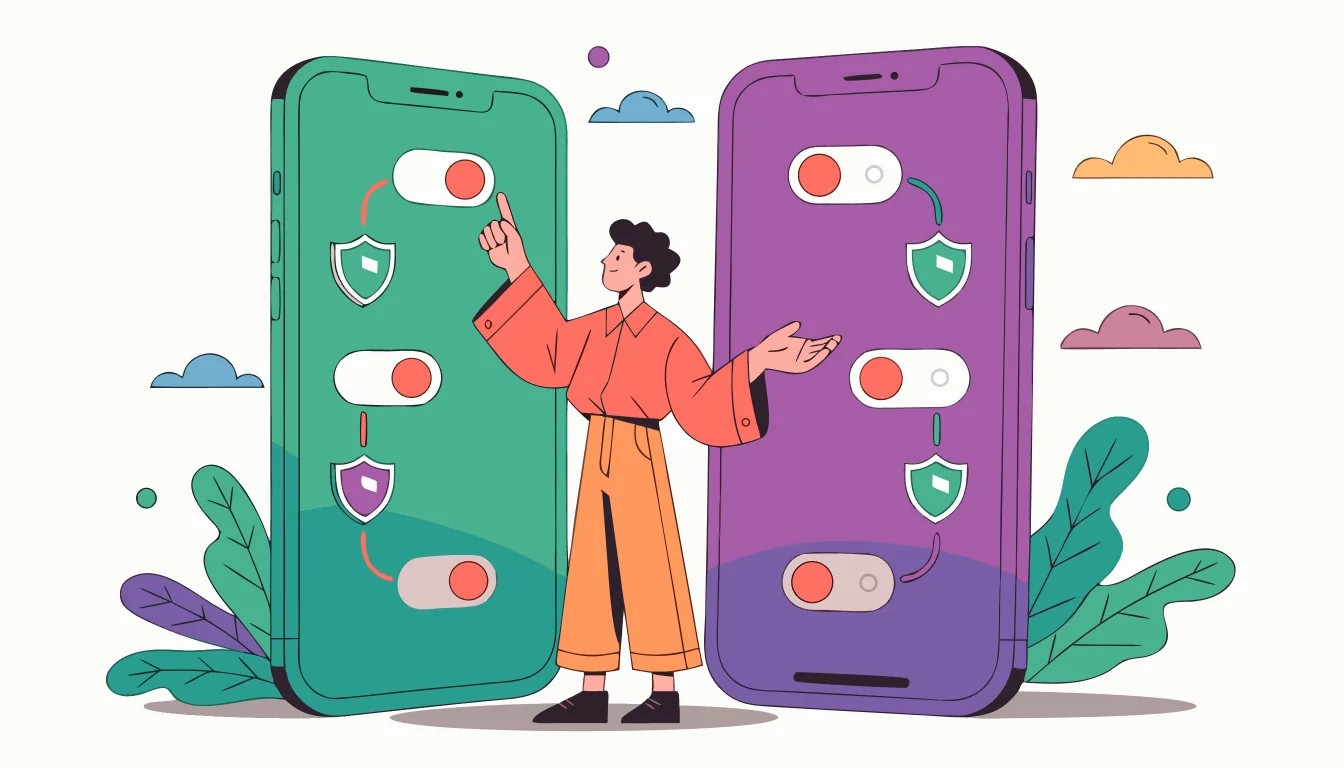
Android commonly permits broader on-device administration when the owner can install and authorize the software. iPhone paths are usually more constrained, often account-, backup-, or jailbreak-dependent. Neither path grants a right to defeat Facebook’s privacy controls.
Confirm physical access, Android version, permissions, Play Protect impact, battery use, and the exact Facebook feature.
Confirm Apple-account conditions, backup or sync requirements, supported iOS version, feature gaps, and whether setup is legitimate.
 Expert perspective Ron Deibert Professor and Founder and Director of the Citizen Lab
 The platform check belongs before payment: an attractive Facebook feature list cannot compensate for an unsupported device or unauthorized access path.
Prices, renewals, and vendor risk

Monthly-equivalent prices make the shortlist easier to orient, but the final cost can change with billing term, promotion, tax, renewal, device count, and refund rules. Read the checkout total before installing anything.
| Option | Approx. orientation | Renewal/access note |
|---|---|---|
| Meta security tools | $0 | Account-owner access; no private-message reader |
| Family Link / Screen Time | $0 core | Supported family/device setup |
| Hoverwatch | $8–30/mo equivalent | Annual term lowers monthly equivalent |
| mSpy | $12–49/mo by tier | Check renewal, refund, and platform scope |
| uMobix | $12–16/mo annual signal | Checkout and device count vary |
| FlexiSPY | $50–119/mo signal | High-access tier and renewal risk |
Treat the price as an orientation range, not a promise. The access path and vendor data handling matter as much as the monthly number.
Safer next steps and scam signals

If you suspect account compromise, use a previously trusted device, visit
facebook.com/hacked, review active sessions, change the password, enable 2FA,
and turn on login alerts. If the need is family supervision, discuss the
controls openly and start with Family Link or Screen Time.
| Claim | What it really signals | Safer response |
|---|---|---|
| Monitor Facebook by phone number | No legitimate access path | Do not pay or share credentials |
| Read private Messenger remotely | Private-content bypass promise | Reject the claim |
| Free invisible APK | Malware or account-risk signal | Do not install it |
| Facebook shows an unfamiliar session | Possible account compromise | End the session and secure the account |
The defensive path is clear: secure the account first, use transparent controls for family safety, and consider commercial monitoring only for a device you are authorized to administer.
Bottom line
Start with Facebook’s own recovery and security controls for account problems. Use Family Link or Screen Time for transparent device supervision. Consider Hoverwatch, mSpy, uMobix, or FlexiSPY only after verifying the exact device path, current Facebook claim, approximate price, renewal, refund, and vendor-risk tradeoff. No option here is a phone-number-only or private-Messenger reader.
Facebook monitoring FAQ
01 Can a phone number or username monitor Facebook?
No. A phone number, username, email address, or profile URL alone does not provide legitimate access to Facebook or Messenger content. Promises of that kind are scam signals.
02 Can a monitoring app read private Messenger messages?
Do not assume it can. Any legitimate device-level monitoring claim requires an authorized device and a current platform-specific setup path; Meta's own security tools do not expose private messages to a parent or third party.
03 What should I do if my Facebook account was hacked?
Use facebook.com/hacked on a device you previously used to log in, review Where You're Logged In sessions, change the password, enable two-factor authentication, and turn on login alerts.
04 Is Facebook's own security tooling free?
Yes. Meta's recovery, session review, two-factor authentication, and login-alert controls are account-security features rather than paid monitoring products.
05 What access does an authorized device-monitoring app need?
Usually physical access or equivalent administrator control over the owned or supervised device, plus a supported operating system and a feature-specific setup path. iPhone coverage is often narrower than Android coverage.