The best free Android monitoring app depends on what you mean by “monitoring.” If you need transparent parental controls, Google Family Link is the best first choice. If you need a free basic monitoring plan with call, SMS, and location logs, iKeyMonitor is the more spy-app-like option. If you want a fuller paid suite, most products are not free; they are trials.
That distinction matters. A free parental-control app, a free basic plan, a 7-day trial, and a paid spy app are not the same thing. This guide separates them so you can see what is genuinely free, what is limited, what becomes paid, and which old “free spy app” names should be treated carefully.
Use monitoring tools only on Android devices you own, manage, or supervise with clear authority. Free does not make secret monitoring, credential theft, or phone-number-only tracking legitimate or technically realistic.
Fast answer
Google Family Link is the best genuinely free Android parental-control starting point.
Microsoft Family Safety is useful when your family already uses Microsoft accounts, Windows, Xbox, or Edge.
iKeyMonitor has a real free basic plan, but it is limited to recent call, SMS, and GPS logs.
Kaspersky Safe Kids and Qustodio have useful free/basic paths, with richer features behind trials or paid plans.
Hoverwatch is a 3-day trial and paid product, so it belongs in trial comparisons, not the free-forever shortlist.
Quick answer: what is actually free?

The strongest free Android monitoring options are transparent parental controls and limited free plans. Full commercial spy-app monitoring usually requires a paid subscription after a short trial.
| App | Free status | What you get for free | Where it becomes paid or limited |
|---|---|---|---|
| Google Family Link | Free forever | Screen time, app approvals/limits, content controls, child location, family-account supervision | Needs supported child Google account and supervised device conditions |
| Microsoft Family Safety | Free app | Activity reports, Android app/game limits, Edge web filtering, family location tools | Works best inside the Microsoft ecosystem; filtering depends on Edge |
| iKeyMonitor | Free basic forever | Limited call history, SMS logs, and GPS location logs | Latest 20 log items; paid add-ons from $9.99/3 days or $16.66/month |
| Kaspersky Safe Kids | Free/basic plus 7-day trial | Basic child-safety controls and trial access to fuller features | Premium features require a paid plan after trial |
| Qustodio | Free plan for 1 child/device | One protected child device and basic supervision | More devices and richer features require Premium Basic or Complete |
| Hoverwatch | 3-day free trial | Commercial Android monitoring trial | Paid after trial; Personal pricing around $29.95/month |
| Norton Family | Paid with trial | Trial access to paid parental controls | Paid plan around $39.99/year |
If you want the most honest free starting point, begin with Google Family Link. If you need Microsoft account controls across Android, Windows, and Xbox, check Microsoft Family Safety. If you specifically need a free basic monitoring plan with Android logs, iKeyMonitor is the clearest fit.
What free Android monitoring apps can and cannot do

Free Android monitoring apps can usually help with supervised child accounts, screen-time limits, app approvals, app blocking, content filtering, location sharing, basic activity reports, or limited device logs.
They usually cannot replace a paid spy-app dashboard. Full social-app monitoring, call recording, screenshots, deep message capture, and advanced alerts are often paid, limited, platform-dependent, or unavailable in transparent free parental-control tools.
Google Family Link, Microsoft Family Safety, Qustodio free, and Kaspersky Safe Kids basic/trial are best when the device user is a child and the goal is visibility, limits, and safer habits.
iKeyMonitor’s free basic plan and Hoverwatch’s trial are closer to commercial monitoring products, but the free part is limited or temporary.
The 5 best free Android monitoring apps in 2026
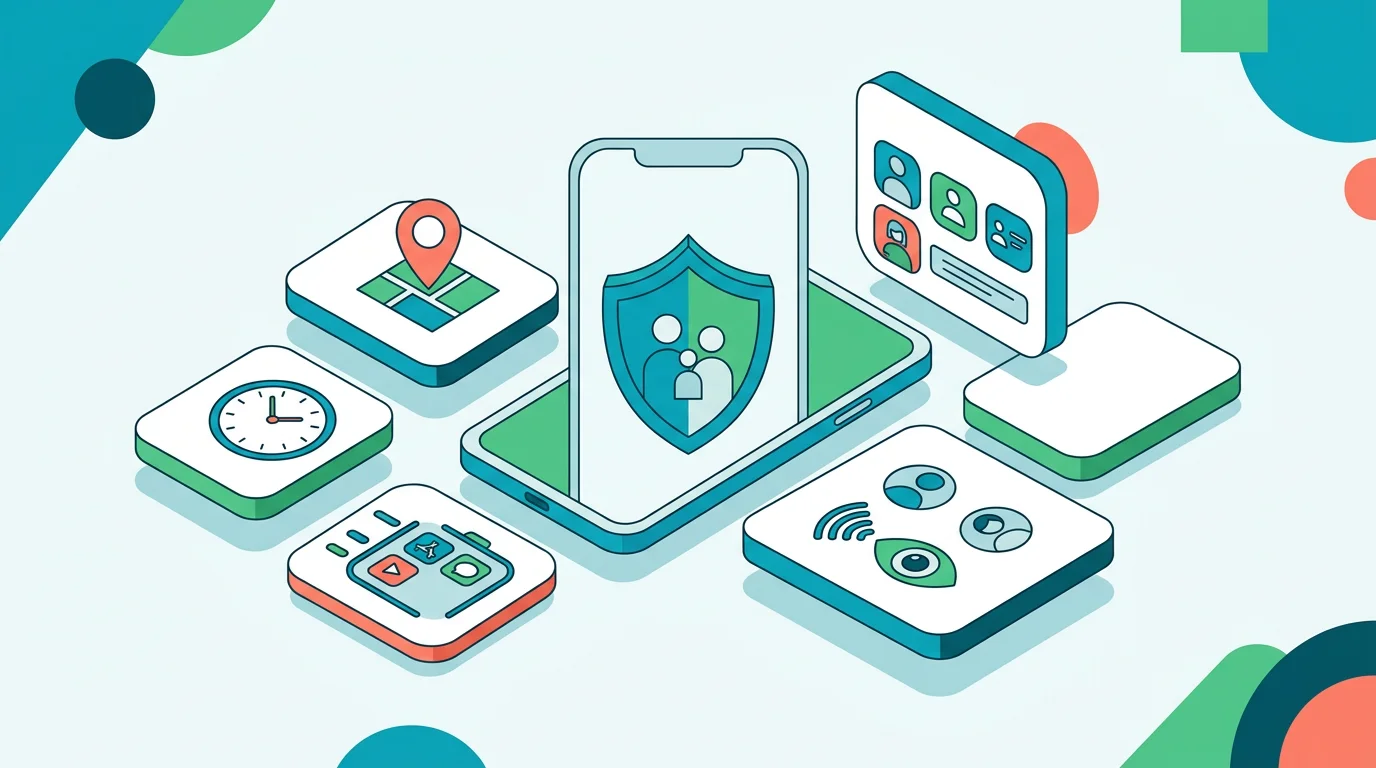
This list is ordered by free usefulness and clarity, not by the most invasive feature set. The goal is to help you choose without confusing “free forever” with “free trial.”
1. Google Family Link
Google Family Link is the best free Android monitoring app for most parents because it is built around supervised child accounts rather than hidden monitoring. It is free, maintained by Google, and designed for Android family management.
Family Link can help parents manage screen time, set app limits, approve or block apps, apply content controls, review child account settings, and see a child device’s location when supported conditions are met. It is the right first check when the goal is family safety rather than a commercial monitoring suite.
The limits are also important. Family Link is not a call recorder, SMS reader, social-app spy tool, or full activity surveillance dashboard. It works best when the child has a supervised Google account and the device supports the required controls.
Free status: Free forever.
What you get for free: Screen time, app approvals, app limits, content controls, account supervision, location features, and alerts under supported family-account conditions.
Where it becomes limited: It is transparent parental control, not full commercial spy-app monitoring.
Bottom line: Start with Google Family Link if you want a genuinely free, transparent Android parental-control app.
2. Microsoft Family Safety

Microsoft Family Safety is the best free option for families already using Microsoft accounts, Windows, Xbox, or Microsoft Edge. It is not an Android spy app, but it can be a useful free family-safety layer.
On Android, Microsoft Family Safety can support activity reports, app and game limits, location tools, and web filtering through Microsoft Edge. It is useful when the family already manages screen time across multiple Microsoft-connected devices.
The main limitation is ecosystem fit. Web filtering depends heavily on Edge, and the experience is strongest when the child uses Microsoft accounts and devices. If your child mostly uses Chrome, Google accounts, and Android-only devices, Family Link may be the simpler starting point.
Free status: Free app.
What you get for free: Activity reports, app/game limits, family location tools, and Edge-based web filtering.
Where it becomes limited: Filtering and reporting depth depend on Microsoft account and browser use.
Bottom line: Choose Microsoft Family Safety if your household already uses Microsoft accounts and you want a free cross-device family-control layer.
3. iKeyMonitor
iKeyMonitor is the best free basic plan for readers who came looking for a spy-app-style Android monitoring product rather than a transparent platform parental-control app.
The free plan is real, but narrow. iKeyMonitor says its free plan can monitor call history, SMS logs, and GPS locations with the latest 20 log items. That can be enough for a simple test or a very limited monitoring need, but it is not the same as a full paid dashboard.
iKeyMonitor also helps clarify a common myth. Its purchase flow indicates that having only a phone number, IMEI, or serial number is not compatible with real monitoring. You need a legitimate device or account access path.
Free status: Free basic forever.
What you get for free: Limited call history, SMS logs, and GPS location logs, with latest-log limits.
Where it becomes paid or limited: Add-ons start from $9.99 for 3 days or from $16.66/month; self-hosted business pricing starts around $10/month/device annually.
Bottom line: iKeyMonitor is the clearest free basic monitoring pick, but the free plan is limited by design.
4. Kaspersky Safe Kids

Kaspersky Safe Kids is a good option if you want a security-vendor parental control product with a free/basic version and a short trial of fuller features. It fits readers who want child-safety controls rather than a spy-app dashboard.
Kaspersky’s materials describe Android parental-control features such as web filtering, screen-time controls, app control/reporting, and GPS location in the product family. Its support pages distinguish free, trial, and Premium versions, which is exactly the distinction a “free Android monitoring” buyer needs to understand.
The catch is that the more complete experience is trial or Premium territory. Kaspersky advertises a 7-day free trial and warns users to cancel before the trial ends if they do not want charges.
Free status: Free/basic version plus 7-day free trial.
What you get for free: Basic child-safety functionality; trial access to more complete features.
Where it becomes paid or limited: Premium features require a paid plan after the trial.
Bottom line: Kaspersky Safe Kids is worth checking when you want a parental-control product with a free/basic path, but read the trial terms.
5. Qustodio

Qustodio deserves a place in the primary shortlist because its official help center confirms a Free plan for one child/device. That makes it more relevant to “actually free” intent than trial-only spy apps.
Qustodio is a parental-control product, not a hidden monitoring app. Its help materials describe supervision across Android and other platforms, activity timelines, games and apps, screen-time routines, website blocking, YouTube activity, location, and other features depending on plan and platform.
The free tier is limited. Qustodio states that Free and Premium trial accounts protect one kid’s device, while Premium Basic covers more devices and Premium Complete removes device limits. Current public pricing signals list Free at $0, Basic around $54.95/year, and Complete around $99.95/year.
Free status: Free plan for one child/device.
What you get for free: One protected child device and basic parental supervision.
Where it becomes paid or limited: More devices and richer features require Premium Basic or Premium Complete.
Bottom line: Qustodio is a strong free-one-device parental-control option, especially if you may later upgrade to a broader paid plan.
Trial and paid Android monitoring apps that are not really free

Some products appear in free Android monitoring searches because they offer a trial, a demo, or aggressive affiliate wording. They may be useful, but they should not be described as free apps.
Hoverwatch is the clearest example from the old article. It offers a 3-day free trial with no credit card required, and its Android monitoring features may fit owned or managed Android devices. But after the trial it is a paid product. Hoverwatch pricing signals include plans from about $24.95/month on one product page and Personal pricing around $29.95/month, $59.95/quarter, or $99.95/year on the pricing page.
Norton Family is also not a free Android monitoring app. It is a paid parental control product with trial offers and public pricing around $39.99/year. It may be worth comparing if you want a paid family-safety suite, but it should not be in a “free forever” list.
mSpy, uMobix, Eyezy, and KidsGuard Pro are paid commercial monitoring suites. They belong in a paid mobile spy app comparison, not as answers to “best free Android monitoring apps.” For that broader buyer path, use the separate mobile spy app guide.
Old “free spy app” names to avoid or verify carefully
The old article recommended Spyzie and XNSPY as if they were normal free Android monitoring choices. That is not strong enough for a 2026 refresh.
Spyzie, Cocospy, Spyic, TheTruthSpy, and similar legacy stalkerware names should not be primary recommendations. Security reporting around the stalkerware industry has shown repeated hacks, leaks, and exposed data across many vendors. That matters because monitoring apps may process location, messages, account data, and other sensitive records.
XNSPY should also be handled carefully. If a current official free plan is not clear, do not treat it as a free recommendation. At most, it belongs in a paid or verify-before-buying comparison.
Avoid any “free” monitoring site that promises credential theft, device cloning, secret partner tracking, invisible employee surveillance, or remote monitoring from only a number. Those are not helpful buyer features; they are red flags.
How to choose a free Android monitoring app
Start with the problem, not the feature list.
If you need child screen-time controls, app approval, content filtering, and location visibility, start with Google Family Link. If your household already uses Microsoft accounts, compare Microsoft Family Safety.
If you want a commercial Android monitoring trial, evaluate Hoverwatch as a trial, not as a free app. Check the cancellation date and renewal price before relying on it.
Before installing anything, check whether you own, manage, or supervise the Android device; whether the tool requires a supervised child account, device access, or app installation; which features are actually free; when a trial ends; what the renewal price is; what data the vendor stores; and whether the device user should see the controls or receive notice.
If a free platform tool solves the problem, use that before sending sensitive phone data to a commercial monitoring vendor.
Bottom line
Use Google Family Link first for genuinely free Android parental controls. Use Microsoft Family Safety if your family is already in the Microsoft ecosystem. Use iKeyMonitor if you need a narrow free basic monitoring plan. Check Kaspersky Safe Kids and Qustodio when you want a free/basic parental-control product with paid upgrade paths.
Treat Hoverwatch as a trial, not a free app. Treat old “free spy app” claims with caution unless current official free terms are clear.
FAQ
Free Android monitoring app FAQ
01 What is the best free Android monitoring app overall?
Google Family Link is the best free Android monitoring app for most families because it is free, transparent, and built for supervised Android child accounts. iKeyMonitor is better if you specifically need a limited free basic log-monitoring plan.
02 Is Google Family Link really free?
Yes. Google Family Link is a free parental-control app, but it requires supported family-account and child-device conditions. It is not a full spy-app dashboard for calls, texts, screenshots, or social apps.
03 Is Hoverwatch free?
Hoverwatch is not free forever. It offers a 3-day free trial, then paid plans. Use it as a commercial Android monitoring trial, not as a no-cost parental-control tool.
04 Can a free app monitor calls, texts, and social media?
Usually not all of that. iKeyMonitor's free basic plan can cover limited call, SMS, and GPS logs, but full social-app monitoring, screenshots, call recording, and deeper activity capture are usually paid, limited, or platform-dependent.
05 Can I monitor an Android phone with only the phone number?
No. Phone-number-only Android monitoring claims are a scam signal. Real monitoring requires a supervised account, device access, family setup, or another authorized path.