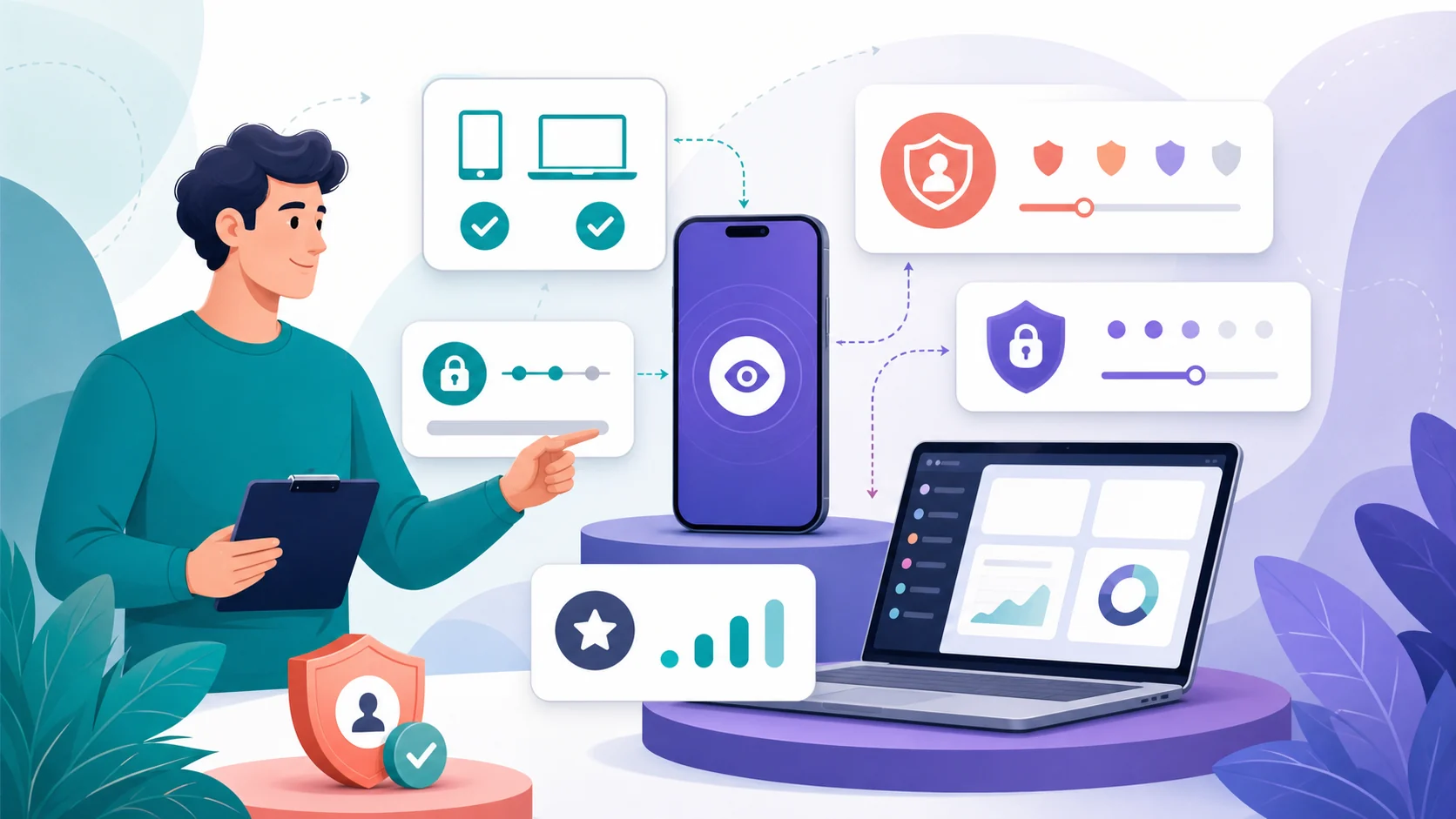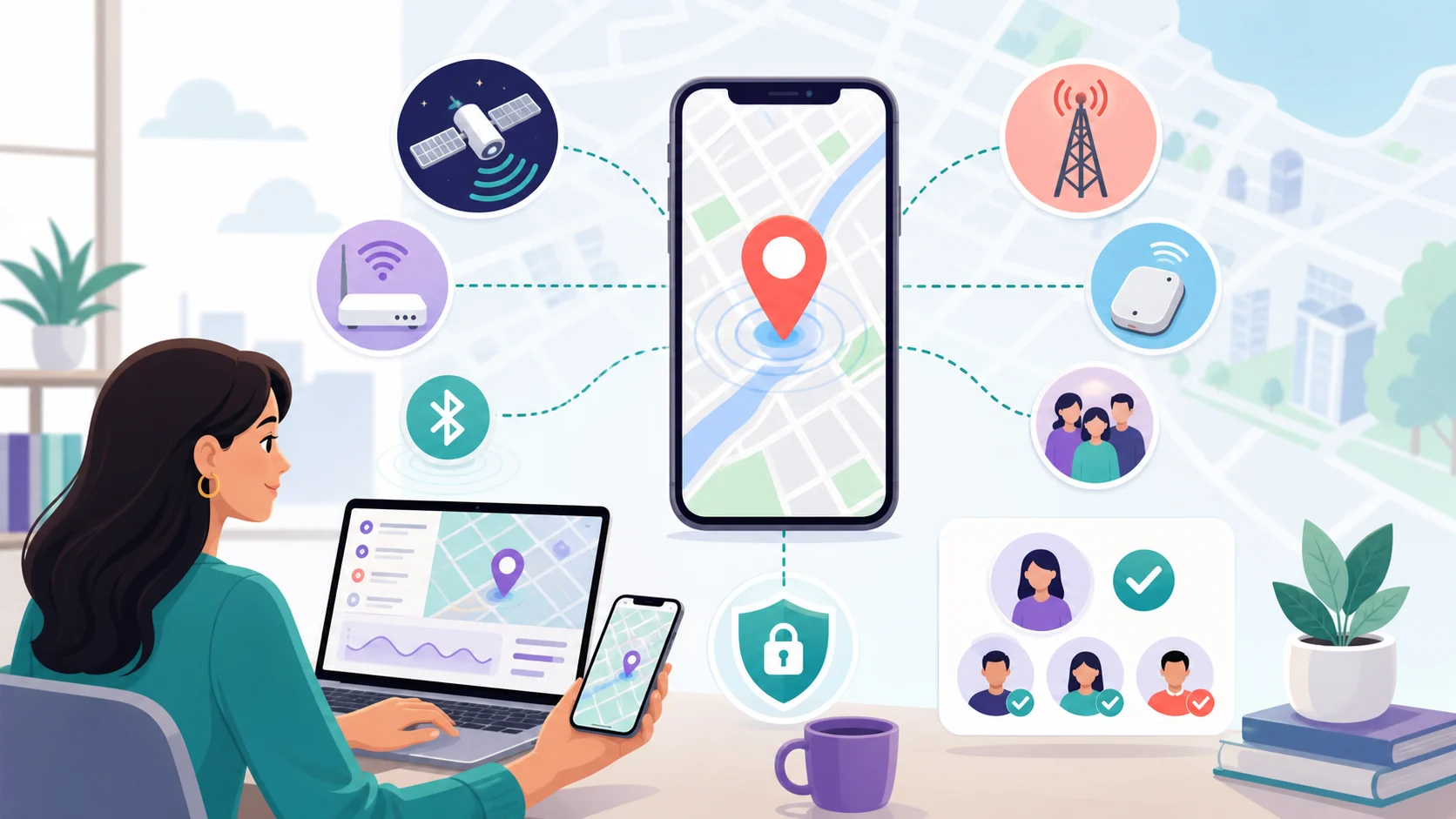

The best phone tracker app depends on the task; there is no universal winner. Use Apple Find My or Google Find Hub for a missing device, Google Family Link for a supported supervised child device, and Life360 for consensual family location sharing across Android and iPhone. Consider Hoverwatch or FlexiSPY only when an authorized need requires higher access.
This guide compares all six options using current official documentation, not equivalent hands-on tests. It separates vendor claims from platform facts and favors the least intrusive option that can do the job.
Which phone tracker app fits your situation?

Choose a phone tracking tool by what you need to find, share, or manage. Lost-device services, family locators, parental-control systems, and activity-monitoring products solve different problems.
None of these tools works on every phone or in every device state. Platform support, account relationships, permissions, setup, and connectivity determine what is actually available.
Technical access is not the same as authorization; confirm the relationship and rules before collecting another person’s location or activity.
If these categories are unfamiliar, start with our explanation of how phone tracking apps work.
Compare phone tracker apps by use case

The six options are not interchangeable. Compare their intended job, supported platforms, setup relationship, visibility, and main limitation before looking at feature counts.
| Product | Best fit | Platforms | Access or setup | Visibility or consent | Main limitation |
|---|---|---|---|---|---|
| Hoverwatch | Authorized higher-access monitoring | Android, Windows, and macOS; no iPhone support documented | Complete current access and setup path not established | Policy permits defined parental use and disclosed company-device use | Exact phone, setup, and commercial terms require confirmation |
| Apple Find My | Finding an Apple device or consensual Apple location sharing | Supported Apple devices and items | Apple account, supported device, and documented setup conditions | Each family member controls location sharing | Not an Android tracker or activity-monitoring app |
| Google Family Link | Parental controls for a supported supervised child device | Supported Android, Chromebook, and compatible Fitbit child devices | Parent and child account/device relationship | Supervised child account and device model | A child iPhone or iPad cannot be supervised the same way |
| Google Find Hub | Finding, securing, or erasing a lost Android device | Supported Android devices and items | Google account plus documented device and connection conditions | Owner-controlled lost-device service | Not parental control or activity monitoring; recovery depends on setup and device state |
| Life360 | Consensual family location across Android and iPhone | iOS and Android | Circle membership and persistent device permissions | Members use visible sharing controls | Requires sensitive permissions and has data-use tradeoffs |
| FlexiSPY | Authorized higher-access commercial monitoring | Separate Android and iPhone paths with configuration limits | Android documentation requires physical access; other requirements vary | Vendor markets hidden operation | Complex setup, security, privacy, and feature-level requirements |
Hoverwatch appears first because of IAVCEI’s editorial ordering rule, not because it is the best answer for every reader. For a missing phone, a first-party lost-device tool is usually a better fit than a higher-access monitoring product.
The table excludes prices and numeric scores. Plan terms change, and the reviewed sources do not provide an equivalent test of accuracy, battery use, update speed, or reliability across all six options.
How we evaluated phone tracker apps

We evaluated each option by the practical questions that decide whether it can solve the reader’s problem: use-case fit, platform support, access requirements, visibility, data handling, stopping controls, and current documentation.
Documented platform compatibility, required device or account access, and location-only versus broader activity scope.
Transparency, stopping or removal controls, sensitive permissions, data handling, and current support documentation.
These checks keep feature counts in context. A tracker with more features can still be the wrong choice if it needs the wrong platform, too much access, or unclear data controls.
The same evidence standard applies across first-party, family, parental-control, and higher-access tools.
-
Platform and supported device
-
Required access and account relationship
-
Visibility and consent controls
-
Data collection and retention
-
Stopping, removal, and deletion
-
Current support and update evidence
Official product pages show what a platform or vendor currently publishes; they do not prove that every advertised feature works reliably on every phone. When the documentation did not establish an exact device, setup path, root requirement, refund term, or retention period, we treated the detail as unknown rather than assuming the best case.
 Evidence perspective Serge Egelman Senior Research Scientist and Group Lead for Usable Privacy and Security, ICSI
 Egelman’s research group analyzed more than 80,000 Android apps and found tracking and profiling practices that could conflict with user expectations or public disclosures. For a tracker-app decision, that means a product description is only a starting point: permissions, third-party software, and actual data-sharing behavior also matter.
We also kept unlike tools in their proper categories. Apple Find My and Google Find Hub are first-party lost-device services, Life360 is a family locator, and Family Link is a parental-control system. Hoverwatch and FlexiSPY advertise broader activity monitoring, which calls for closer scrutiny of authorization, permissions, visibility, and data handling.
Hoverwatch

Hoverwatch is the first full review under IAVCEI’s editorial ordering rule, but it is not the universal best tracker. The vendor advertises Android, Windows, and macOS products; its current homepage does not list an iPhone version.
If the task is finding a missing Apple device, start with Find My instead.
Hoverwatch advertises Android location and several activity categories, including calls, messages, camera events, web activity, calendar, contacts, and selected social or messaging activity. Its dated update log also shows a maintained Android release stream.
The Hoverwatch acceptable-use policy permits defined parental and disclosed company-device uses, subject to authorization and applicable law. It prohibits adult-partner monitoring. The reviewed sources do not establish a complete current setup path.
Those categories come from the vendor, not an independent measure of accuracy or reliability. Before choosing the product, confirm the exact phone model, Android build, region, required feature, permissions, visibility, and removal path.
The reviewed sources also do not establish current retention, deletion, refund, price, or device-limit terms.
Hoverwatch: verified fit and tradeoffs
Pros
- The vendor maintains a dated Android update log.
- Its acceptable-use policy defines limited parental and disclosed company-device scenarios.
Cons
- The reviewed official pages do not document iPhone support.
- Exact device compatibility, setup access, and current commercial terms still require confirmation.
A hidden icon would not make any monitoring product technically invisible. Android settings, permissions, security controls, and device behavior remain separate checks. Our comparison of Android monitoring visibility and setup limits explains those constraints in more detail.
Review Hoverwatch’s documented platform offering only after confirming the use case and exact device requirements.
Apple Find My
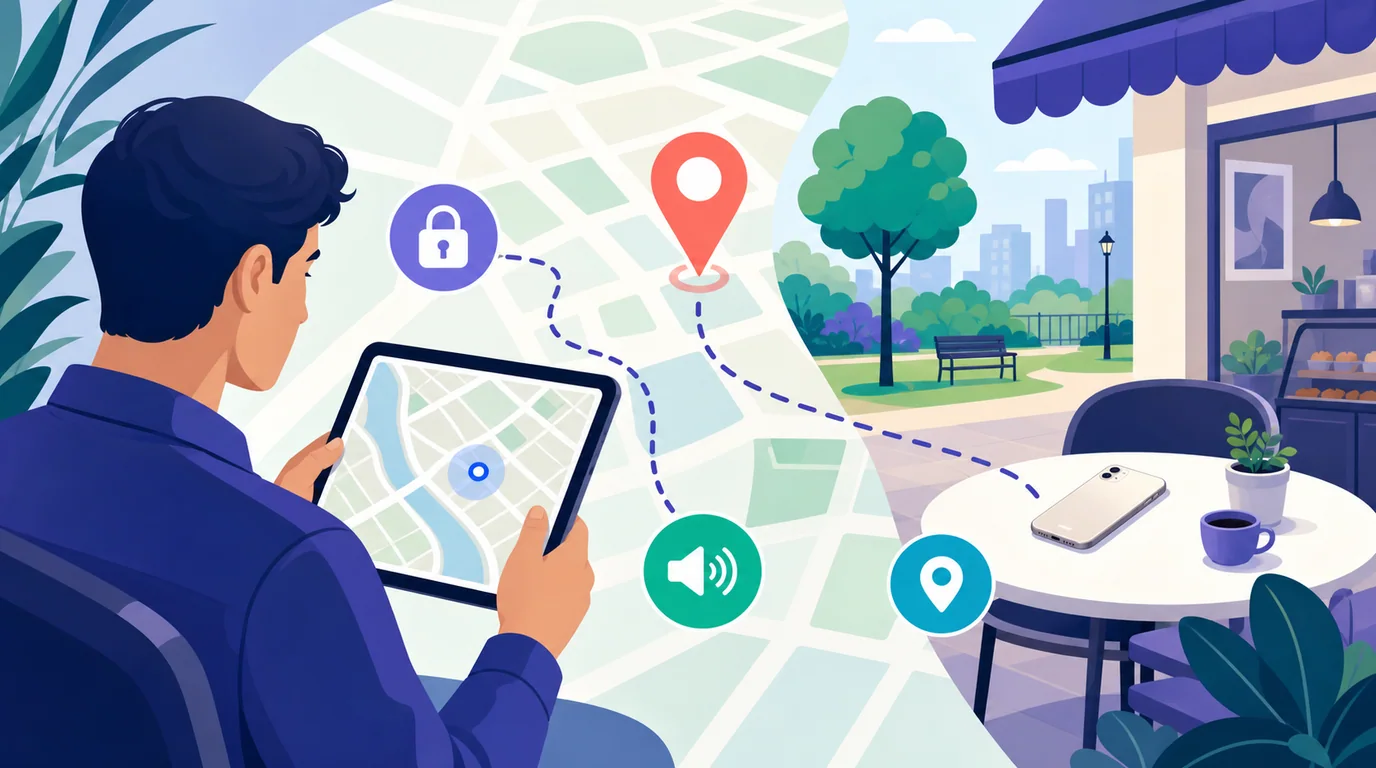
Apple Find My is the first-party choice in this comparison for locating a supported Apple device or personal item. Apple says it can help locate devices such as an iPhone, iPad, Apple Watch, or Mac and protect a missing device by locking it.
With the documented account, device, and setup conditions in place, Find My can locate a supported device. Family members may also be able to play a sound, use Lost Mode when available, or erase the missing device. Availability still depends on the device, setup, network state, and supported Find My behavior.
Find My supports user-controlled location sharing and location-based notifications. Under Apple’s Family Sharing model, each family member chooses whether to share a location and can stop sharing at any time. This model does not provide broader activity monitoring or access to device communications.
Find My is not a general Android tracker and does not monitor calls, messages, browsing, social apps, or typed input. That narrower scope is an advantage when the job is simply finding an Apple device or sharing location by choice.
Do not assume it can always provide a current position for every powered-off or offline device; Apple documents different behavior by device, setup, and network state.
Google Family Link

Google Family Link is designed for parental supervision rather than covert activity monitoring. It can manage apps and screen time and show the location of a supported supervised child device when configured.
Google lists support for supervised Android devices from Android 6.0, supported Chromebooks, and compatible Fitbit devices, subject to feature-specific requirements. A parent can use the Family Link app on the supported Android, iOS or iPadOS, and Chromebook configurations Google lists; Google also says some settings can be managed on the Family Link website.
The presence of a parent app on an iPhone does not make an iPhone or iPad a supervised child device. Google states that child iPhones and iPads cannot be supervised with Family Link in the same way as supported Android devices. Parent-side access and child-device support are separate questions.
Family Link is not a hidden app for reading a child’s calls, messages, chats, or screen. It is also not the general tool for finding any lost Android phone; that role belongs to Find Hub.
The reviewed page does not establish that a child’s device location is always current or available.
Google Find Hub
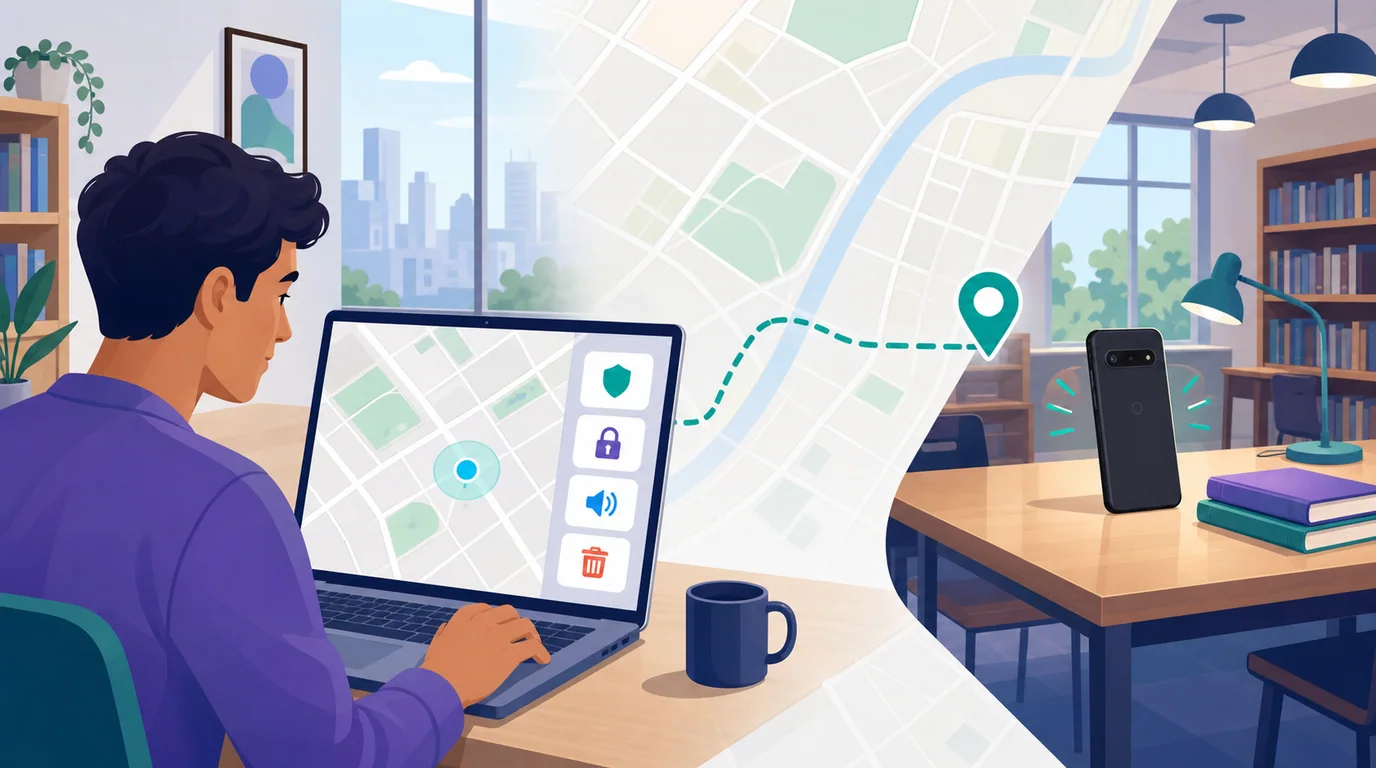
Google Find Hub is the first-party option here for locating, securing, or erasing a lost Android device. Google says Find Hub is turned on when a Google Account is added.
Remote secure and erase actions have documented account, power, connection, and settings prerequisites. Offline finding follows separate conditions.
Find Hub can help locate, ring, lock, mark as lost, or erase a supported Android device when the account, settings, power, and connectivity conditions are met.
Encrypted recent locations and the Find Hub network can help with some supported offline devices or items. That is not the same as guaranteed live GPS from any powered-off phone.
Depending on settings and device support, Find Hub can use an encrypted recent location and its encrypted network to help find supported offline devices or items. That can be useful, but it is not a guaranteed live position from a powered-off phone.
The official guidance also lists options to play a sound, mark a supported device as lost, or erase it. Erasure is a final protection step: Google says the device’s location is no longer available in Find Hub afterward.
Find Hub does not monitor calls, messages, browsing, app use, or social activity. Choose it for recovery and protection of a lost Android device, not for parental controls or higher-access activity monitoring.
Life360
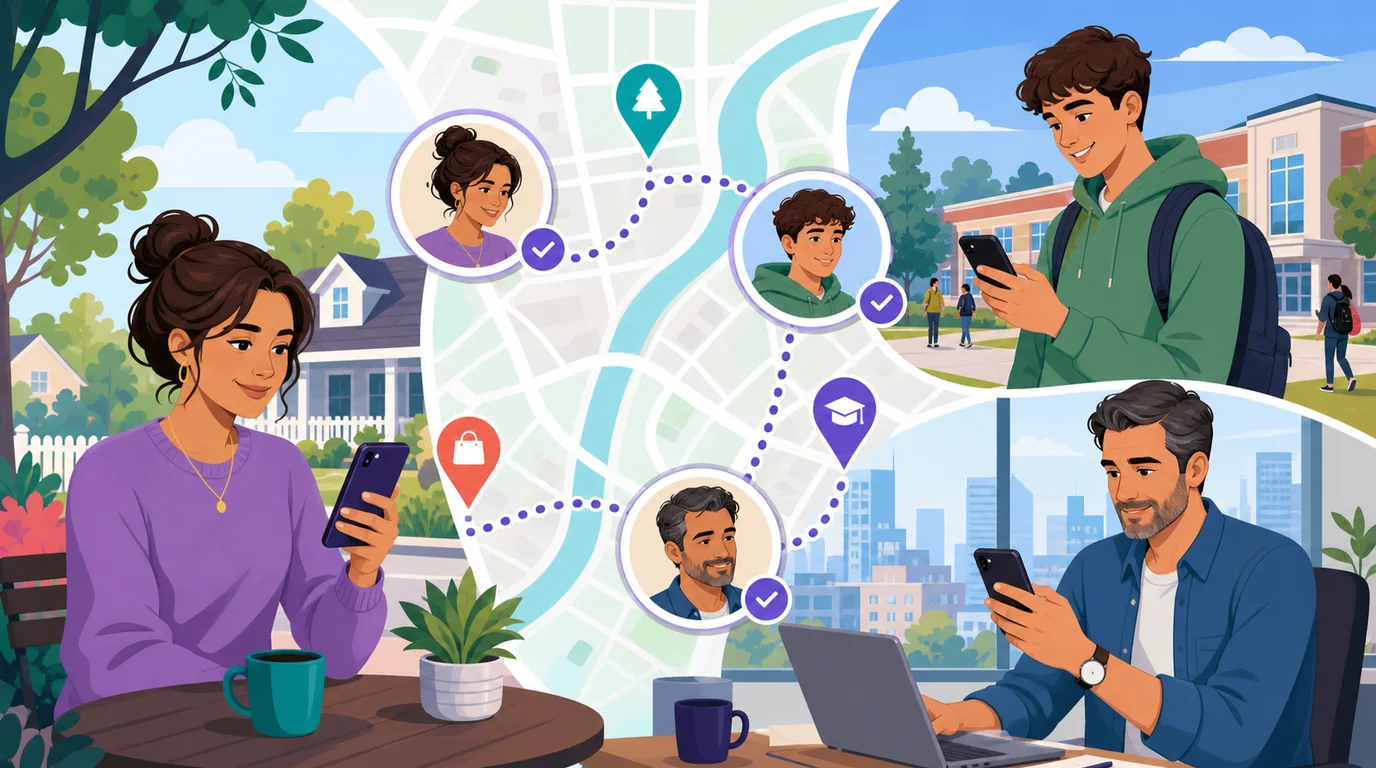
Life360 is the cross-platform family-location option in this set. Its documentation provides separate iOS and Android permission paths, and the vendor advertises a private family map, check-ins, location history, and place alerts.
Life360 describes location sharing for a family Circle and says a user can control the duration of temporary sharing and turn it off. Its current product page lists a free plan with location sharing and limited history and place-alert features, but plan limits should be rechecked before subscribing.
Life360’s phone permission guidance recommends persistent precise location and additional phone settings and permissions. It says location data may also be shared with partners for crash detection, research, analytics, attribution, and tailored advertising. Review the current privacy choices rather than assuming the data is used only for the family map.
Life360 describes its location as “real-time,” but the reviewed material does not provide an equivalent independent measurement of accuracy or update latency. It also does not prove negligible battery use.
Evaluate permissions and battery-optimization requirements on the actual phones instead of relying on a universal low-drain claim.
The supplied sources do not support claims that Life360 reads calls, texts, social chats, browsing, or typed input. Its cross-platform, user-controlled sharing model can be a better fit than a higher-access product for a household that only needs consensual location sharing.
FlexiSPY

FlexiSPY is a higher-access commercial monitoring product, not a default lost phone or family-location tool. Captured official pages advertise separate Android and iPhone paths and categories including location, calls and messages, app activity, media, browsing, typed input, recording, alerts, and remote management.
The captured Android page says physical access is required. The vendor announces Android 15 support and separately documents an iPhone path with device and OS limits. Feature availability varies by device, OS, plan, root or jailbreak state, and configuration.
The vendor markets hidden and anti-uninstall operation. Those are concealment claims, not proof of technical invisibility, safety, or lawful use. The reviewed capture also does not provide one clear feature-by-feature root or jailbreak matrix or a current refund record.
The captured privacy page says device data older than three months is automatically deleted and describes device and account deletion paths. Treat that as a vendor policy statement, not a guarantee about every account state or legal exception, and recheck the current policy before purchase.
FlexiSPY: verified fit and tradeoffs
Pros
- The vendor documents separate Android and iPhone monitoring paths.
- The captured privacy page describes retention and customer-initiated deletion paths.
Cons
- Hidden-operation marketing creates a material transparency and security concern.
- Exact device, feature, root or jailbreak, plan, and refund requirements need written confirmation.
If a required setup weakens the phone’s security controls, choose a different approach.
Review FlexiSPY’s current documented requirements only after confirming the exact device and OS, feature-level setup, visibility, data handling, removal, and current commercial terms.
How to choose a phone tracker app without over-monitoring
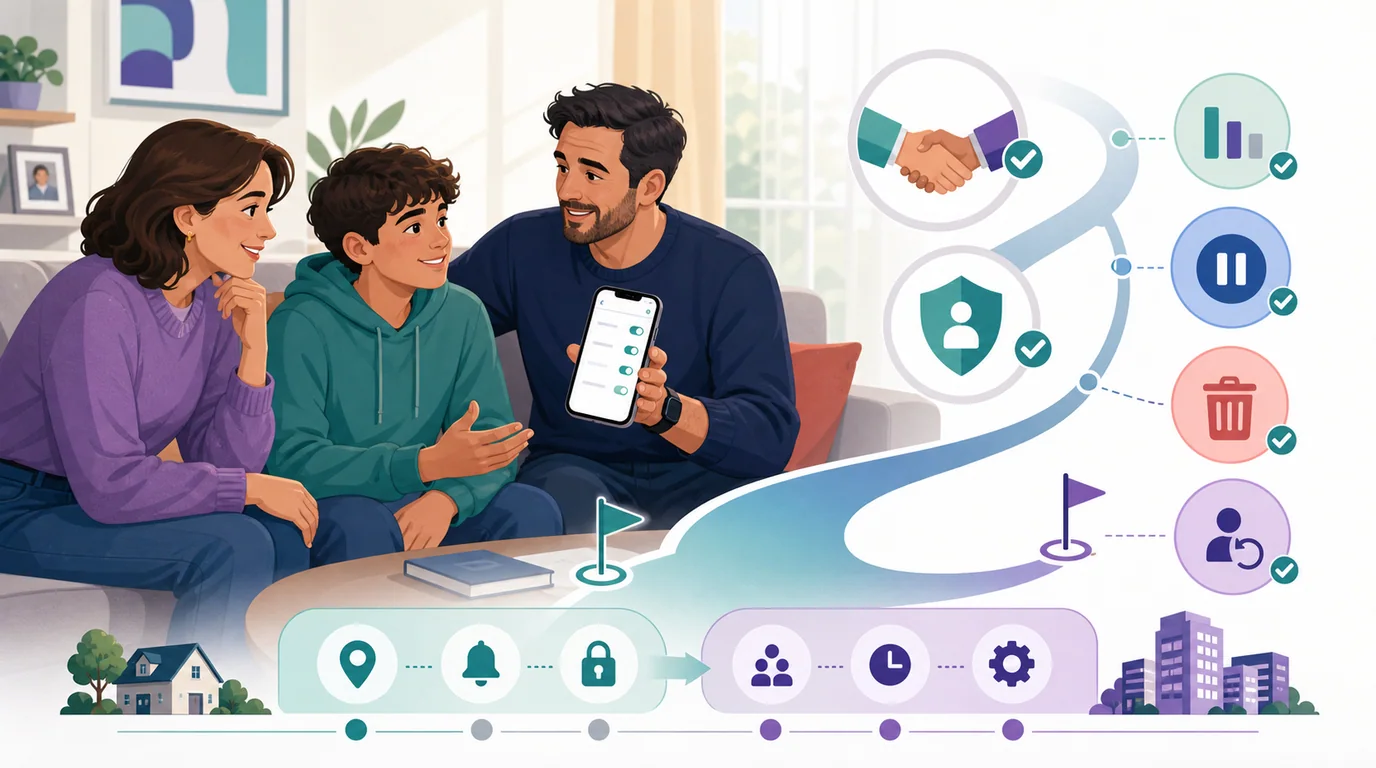
Choose the least intrusive phone tracking app that fits the authorized task, then verify its platform, access, data, and stopping requirements before setup.
Those checks matter because tracker decisions are also data-flow decisions, not only feature decisions.
 Data-flow perspective David Choffnes Professor of Computer Science, Northeastern University
 The ProperData project treats personal information as a flow that begins on user devices and can move to service providers, trackers, or other parties. Its focus on transparency and user control supports a practical buying rule: understand what leaves the phone, where it goes, and how the user can limit or stop that flow.
For a mixed Android-and-iPhone household, use a service designed for user-controlled sharing on both platforms instead of assuming Apple Find My or Google Family Link provides identical cross-platform supervision. In this comparison, Life360 fills that family-location role. FlexiSPY advertises separate platform paths, but its higher access and setup complexity do not make it a simple substitute for consensual family sharing.
Keep authorization separate from technical access: knowing a passcode, owning the account, or paying for a phone does not answer every consent, privacy, or legal question.
For a minor, use age-appropriate disclosure and collect only what serves a defined safety goal. For a company-owned device, use a written policy, clear notice, limited collection, and applicable legal guidance.
Which phone tracker app should you choose?

Choose by use case: Apple Find My for a supported missing Apple device, Google Find Hub for a supported lost Android phone, Google Family Link for a supported supervised child device, and Life360 for user-controlled family location sharing across Android and iPhone.
For higher-access monitoring, review Hoverwatch first under IAVCEI’s editorial order, followed by FlexiSPY. Neither is a universal winner. Both require a closer check of the exact device, permissions, visibility, data practices, removal path, and current terms than a first-party lost-device service.
Do not choose a product because it promises to track “any phone” or remain invisible. Choose it only when its documented platform, access, transparency, and data controls match a clearly authorized need.
FAQ
Frequently asked questions
01 What is the best phone tracker app overall?
There is no single best phone tracker for every situation. Apple Find My fits supported Apple device recovery, Google Find Hub fits supported Android recovery, Google Family Link fits supervised child Android devices, Life360 fits consensual family sharing, and higher-access products require a separate authorization and privacy review.
02 Can a phone tracker find any phone by number?
No consumer tracker can reliably locate any phone from a phone number alone. Real tracking depends on account access, device settings, permissions, platform support, and, for some tools, installation or physical access.
03 Which tracker is best for a lost iPhone or Android phone?
Use Apple Find My for a supported missing Apple device and Google Find Hub for a supported missing Android device. These first-party recovery tools are usually a better first choice than higher-access monitoring apps.
04 Which option is better for consensual family location sharing?
For a mixed Android-and-iPhone household, Life360 is the dedicated cross-platform family-location option in this comparison. Apple Find My and Google Family Link do not provide identical cross-platform supervision.
05 When should someone consider Hoverwatch or FlexiSPY?
Consider higher-access monitoring only when there is a clearly authorized need that cannot be met by a first-party finder, consensual sharing tool, or parental-control system. Confirm the exact device, permissions, visibility, data handling, removal path, and current terms before setup.
Browse more phone tracker reviews after defining the task and platform you need.